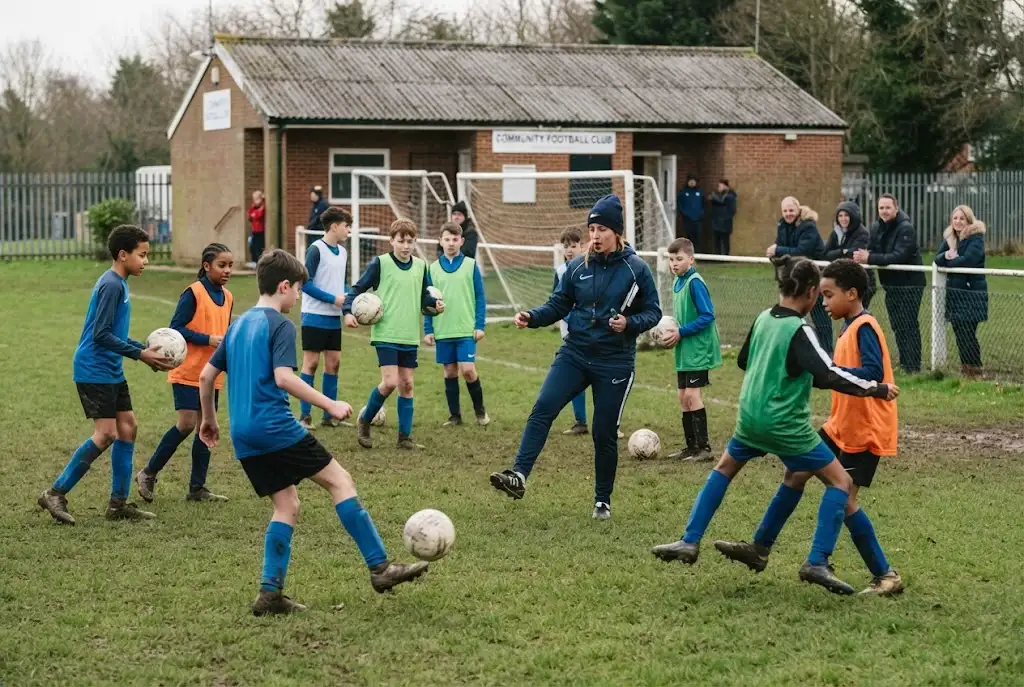

Youth football leagues give young players the opportunity to train regularly, play competitive matches and develop their football skills within an organised environment. Across England and the wider UK, local leagues connect grassroots clubs with regular fixtures while creating structured opportunities for children and teenagers to enjoy the game.
For parents looking for a suitable team, understanding how youth leagues work can make the search much easier. Age groups, location, playing format, coaching standards, travel requirements and the club’s approach to development can all influence whether a particular league is right for a young player. Our wider guide to north east youth football provides additional regional context for families exploring grassroots opportunities.
What Are Youth Football Leagues?
Youth football leagues are organised competitions designed for young footballers across different age groups. They bring clubs and teams together for scheduled fixtures during a football season, giving players the chance to apply what they learn in training during real matches.
The structure of a league can vary. Some competitions are focused strongly on participation and development, while older age groups may involve more competitive league tables and cup competitions. Playing formats can also change as children progress through different stages of youth football.
Regardless of the specific format, a good youth league should provide an appropriate environment for players to develop their football ability while enjoying regular participation.
Why Youth Football Leagues Matter for Young Players
Training is an important part of football development, but matches provide a different learning experience. During a competitive fixture, players must make decisions quickly, communicate with teammates and respond to changing situations.
League football can help young players develop:
- Ball control and technical ability
- Passing and receiving skills
- Decision-making under pressure
- Positioning and tactical awareness
- Communication and teamwork
- Confidence and resilience
- Understanding of match situations
These benefits can develop gradually over time. A young player does not need to dominate every match for the experience to be valuable. Mistakes, difficult games and setbacks can all become useful learning opportunities when coaches and parents maintain a constructive approach.
Choosing the Right Youth Football Leagues
There is no single youth league that will suit every player. Families should consider the individual child’s age, experience, confidence, ability and personal interests before choosing a team.
Location is another practical consideration. Weekly training and weekend fixtures can require considerable time from families, particularly when teams travel to play opponents. A league that is reasonably accessible can make it easier for a child to attend consistently.
Parents should also investigate the club behind the team. A well-organised club with clear communication and an appropriate coaching environment can make a significant difference to a young player’s experience.
What Parents Should Check
Before joining a team, parents can ask about the training schedule, match arrangements, age group, coaching structure and registration process. It is also sensible to understand how the club communicates with families and what safeguarding procedures are in place.
Rather than judging a team only by its league position, parents can consider whether the environment appears supportive and suitable for their child. Youth football is ultimately about development and participation as well as competition.
Harrow Youth League Opportunities
Families searching for a harrow youth league may find several types of grassroots football opportunity depending on the child’s age and location. Local football environments can provide convenient access to regular training and fixtures while helping children become part of their community.
When comparing local competitions, it is useful to look beyond the competition name. Parents should examine the age groups available, the clubs involved, the match schedule and the overall approach to youth development.
The same principle applies when researching a harrow league u14 team. At under-14 level, players are entering a stage where technical ability, tactical understanding and decision-making can become increasingly important. However, enjoyment and appropriate coaching should remain central to the experience.
Suffolk FA Youth League and County-Level Football
The structure of grassroots football often involves local leagues working within the wider county football system. Families searching for a suffolk fa youth league may therefore encounter clubs and competitions connected with the broader football administration in Suffolk.
County football organisations play an important role in supporting grassroots clubs, competitions and football development. Their work can include competition administration, governance, safeguarding support and development initiatives.
For families researching opportunities, checking information from the relevant county football organisation can be useful because league rules, registration arrangements and competition information can change from season to season.
London County Saturday Youth Football League and Weekend Competition
Weekend fixtures are a major part of grassroots football. A search for london county saturday youth football league reflects the demand for organised youth competitions that fit around school and family schedules.
Saturday football can provide a consistent routine for young players. Training during the week followed by a weekend fixture allows players to practise skills and then apply them in a match environment.
However, families should always check the specific fixture schedule and travel expectations of the team. Even within the same broad geographical area, clubs can face very different travel requirements.
East Junior Football and Local Grassroots Development
Interest in east junior football highlights another important feature of grassroots sport: youth football is highly localised. Communities across England have their own networks of clubs, leagues, volunteers and coaches.
This local structure helps make football accessible to young people. A child can often begin playing close to home without needing to enter an elite academy environment.
Grassroots football can also introduce young players to the wider football community. Parents volunteer, coaches develop teams and clubs create opportunities for children who may have very different levels of experience.
Milton Keynes Youth Football
Milton Keynes youth football provides another example of how local football communities can bring together clubs, teams and young players. When researching opportunities in any town or city, families should consider the same core factors: age group, location, training quality, coaching approach, safeguarding and the overall experience offered by the club.
A strong local football environment can be particularly valuable for younger players because regular attendance and consistent involvement are easier when the programme fits naturally into family life.
How Youth Football Leagues Support Player Development
Player development is not simply about moving from one league to another. Progress often happens through small improvements in technical ability, football understanding, confidence and decision-making.
Coaches can use league matches to identify areas that need improvement. A player who struggles to find space, for example, may benefit from training focused on movement and positioning. Another player may need additional work on passing, first touch or defensive decision-making.
This connection between training and matches is one reason organised competition can be valuable. Players can see how technical and tactical concepts work in real situations.
Families interested in the broader structure of competitions can also explore our guide to football county leagues, which looks at how regional and county competitions fit into the wider football landscape.
Development Should Come Before Pressure to Win
Competitive football naturally involves winning and losing, but youth development should not be reduced to results. Children develop at different speeds, and a player’s ability at one age does not necessarily determine their future level.
A supportive coach can challenge players while still allowing them to make mistakes and learn. Excessive pressure can make football less enjoyable, whereas a balanced environment can encourage children to keep practising and developing.
Parents can contribute by focusing on effort, improvement and enjoyment rather than treating every result as a measure of success.
Safeguarding in Youth Football
Safeguarding should be a fundamental consideration when selecting a youth football club or league. Children need a football environment where welfare concerns are taken seriously and adults understand their responsibilities.
The Football Association provides a safeguarding framework for football and guidance covering children and young people involved in the sport. Parents can use official guidance to better understand the standards expected within organised football. The FA’s safeguarding framework explains the wider approach to safeguarding across football.
Families can also ask clubs who is responsible for safeguarding and how concerns can be reported. These are reasonable questions when choosing an environment for a child.
Youth Football Leagues and the Wider England Pathway
For some players, grassroots football remains a lifelong part of the game. Others may eventually seek more advanced competition or academy opportunities.
The pathway can take different forms. A player may progress through local club football, join a stronger development programme or move into a more structured academy environment. Only a relatively small proportion of young players will reach elite levels, so development should not be presented as a guaranteed route to professional football.
Families interested in the national side of youth development can explore our guide to England youth football for additional information about youth teams and the wider national football structure.
How Parents Can Support a Young Footballer
Parents have an important role to play, but their support does not need to involve coaching from the sidelines. Encouraging children to attend training, helping them maintain a healthy routine and allowing them to enjoy matches can be more valuable than constant technical instructions.
Young players also need time away from football. Rest, school, friendships and other interests remain important parts of childhood. A balanced approach can help prevent football from becoming an unnecessary source of pressure.
After matches, asking a child what they enjoyed or what they learned can encourage reflection without making the conversation entirely about the score.
The Future of Local Youth Football
Local youth football depends on clubs, volunteers, coaches, referees, parents and league organisers working together. Every organised team represents a network of people giving young players the opportunity to participate.
As families continue to search for accessible football opportunities, well-run youth leagues can play an important role in keeping grassroots football active. They provide structure while allowing players to develop at a pace appropriate to their age and experience.
For families exploring their options, the best starting point is usually a combination of practical research and an understanding of what the individual child needs. Looking at local football clubs, checking available regional youth football opportunities and understanding the wider competition structure can make the process easier.
Ultimately, the value of youth football leagues extends beyond league tables. They give young people opportunities to play, learn, compete, build friendships and develop a lasting relationship with football. When competition is combined with good coaching, safeguarding and a positive environment, local youth football can provide a strong foundation for players at every level.