
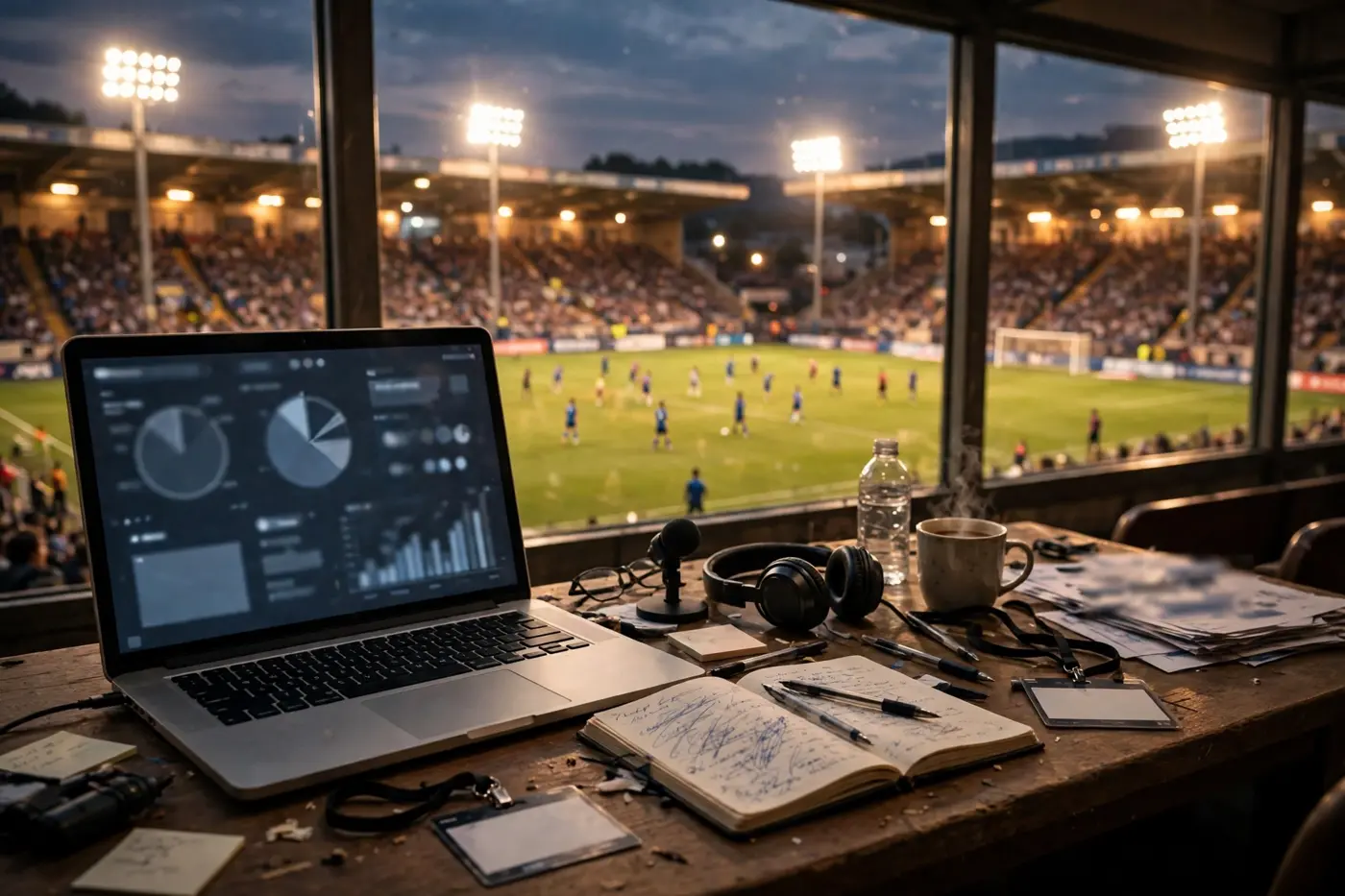
A football match report can look simple at first glance. The score sits at the top, a few paragraphs follow, and a list of scorers and cards fills the bottom. Yet a good football match report carries far more than the final score, and once you know what to look for, you can read one in two minutes and still walk away with a clear picture of the game.
This guide explains the parts of a match report in plain English. You will learn how to read the scoreline, the team news, the key stats, and the timeline, and how to tell a fair report from one that is pushing an angle.
Start With the Scoreline, Not the Story
The scoreline is the first thing most readers check, and it matters, but it never tells the whole story. A 2-1 home win can mean a comfortable evening, a late escape, or a game the home side should have lost by three. The report exists to fill in that gap.
Read the opening paragraph with one question in mind: who controlled the game? A good report answers it in the first two or three sentences. It will say whether one side dominated, whether the game was even, or whether the scoreline flattered the winners. If the opening only repeats the score and the scorers, the report is thin, and you should look to the stats section for the real picture.
A useful habit is to read the score, then skip straight to the timeline of goals and big chances. That gives you the shape of the game before you read anyone’s opinion about it. You can then judge the writer’s verdict against what actually happened.
Team News Tells You What to Expect
Most reports list the two starting line-ups and the substitutes. This section is worth thirty seconds of your time because it explains so much of what follows. A team missing its first-choice striker will struggle to score, and a side with three changes at the back will often look shaky early on.
Look for the formation as well. A report that mentions a switch to three at the back, or a winger moved into midfield, is giving you the tactical context for the whole game. When a team concedes twice down one flank, the team news usually shows why: an unfamiliar full back, or a winger asked to track back all afternoon.
Young players deserve a special note here. If a report mentions a teenager making a first start, that is often the real story of the match, even in a routine win. Youth football has its own competitions and pathways, and our guide to the FA Youth Cup explains how young players get their first taste of knockout football.
Key Stats That Actually Mean Something
Modern match reports carry a stats box, and a few numbers in it are worth more than the rest. Possession tells you who had the ball, but it does not tell you who used it well. Shots on target are far more useful: a side with twelve shots on target and one goal has a finishing problem, while a side with two shots and two goals was ruthless, or lucky.
Expected goals, usually shortened to xG, is the stat that confuses new readers most. It is simply a measure of chance quality. A penalty is worth around 0.76 expected goals because most penalties are scored. A thirty-yard shot through a crowd is worth very little. If a team lost 1-0 but had 2.4 expected goals to the winner’s 0.5, the report should say the losers created the better chances, and the result was harsh on them.
Do not chase every number. Possession, shots on target, corners, and fouls are enough for most readers. The rest is detail for coaches and analysts. If a report quotes a stat you do not understand, check it against the 17 laws of the game and the basic rules that shape how football is played, because most stats only make sense inside those rules.
The Timeline: Goals, Cards and Turning Points
The timeline is the backbone of any match report. It lists the goals, the substitutions, and the bookings in the order they happened, and it lets you replay the game in your head. Read it as a story with turning points, not as a list of events.
Three moments usually decide a match. The first goal changes the game plan of the side that concedes it. A red card changes the shape of the game completely. A substitution around the hour mark often decides the last twenty minutes. A good report will name these moments directly instead of burying them in a list.
Here is a small real-world example. Imagine your club is winning 1-0 at home, then concedes an equaliser in the 70th minute. The report should tell you what changed: did the home side sit back too early, did the manager’s substitution weaken the midfield, or did the visitors simply push an extra forward on? If the report only says “the visitors equalised in the 70th minute”, you have learned nothing. If it says the equaliser followed a tactical switch and ten minutes of pressure, you understand the game.
What the Manager and Players Say Afterward
Most reports end with quotes from the managers, and these are worth reading with a careful eye. A manager who says “we deserved more” after a 3-0 defeat is protecting his players. A manager who praises the opposition’s game plan is usually telling the truth, because managers rarely compliment a rival without reason.
Player quotes are simpler and often more honest. A striker who says the goal “was a long time coming” is telling you about weeks of hard work. A young player talking about his first start will usually mention the crowd, the noise, and the speed of the game. Those details matter, because they show how the match felt from the pitch rather than from the stands.
Be careful with one thing: quotes are chosen, not complete. A report picks the two or three lines that fit its story. If a manager’s full press conference is available, it is worth a look when a result is controversial. The full version often softens a headline that looked harsh in the report.
How to Spot a Fair Report
A fair match report gives both sides their due. It credits the winners without ignoring the losers, and it names the moments that mattered instead of only the goals. It also separates fact from opinion: the facts are the score, the scorers, the cards, and the substitutions, while the opinion is the writer’s judgement about who played well.
Watch for loaded language. A report that calls a tackle “disgraceful” is making a judgement, and you should check whether the rest of the report supports it. A report that calls a performance “dominant” should be backed by the stats: high possession, plenty of shots, and few chances conceded. If the numbers do not match the words, trust the numbers.
Local and youth football reports deserve the same standard. A well-written youth match report explains the pathways young players follow, and our guide to youth football leagues shows how those competitions are structured. The same applies to development football at every level, including the Junior Premier League, where the focus is on player growth as much as results.
Where to Practise Reading Reports
The best way to get better at reading match reports is to read them every week and compare them with the game you watched. Pick one match you saw in full, then read two different reports of it. You will notice what each writer chose to emphasise, and which moments each one left out.
BBC Sport’s football coverage is a good place to practise, because its reports follow a consistent structure: team news, a short match summary, a timeline, and the stats. Once you know that shape, you can read any report quickly and still catch the details that matter.
Football is also a game for everyone, and that includes formats that rarely make the headlines. Our guides to walking football and futsal show how the same reading skills apply to very different versions of the sport, from slower-paced community games to fast indoor matches.
Reading Reports Like a Regular
Reading a football match report well comes down to four habits. Check the score, then read the timeline to learn the shape of the game. Use the team news to understand why things happened. Let the key stats test the writer’s verdict. And read the quotes carefully, knowing they are chosen, not complete.
Try it this weekend. Watch a match, then read its report the next morning and see how much you can reconstruct from the text alone. After a few weeks, you will find you can spot a fair report in seconds, and you will get far more out of every match report you read.