Futsal is a fast-paced form of indoor football that gives players regular opportunities to pass, control and make decisions in tight spaces. Although it shares many characteristics with outdoor football, its smaller playing area and different rules create a distinctive style of play. For young footballers, futsal can complement grassroots training by developing technical ability, awareness and confidence on the ball.
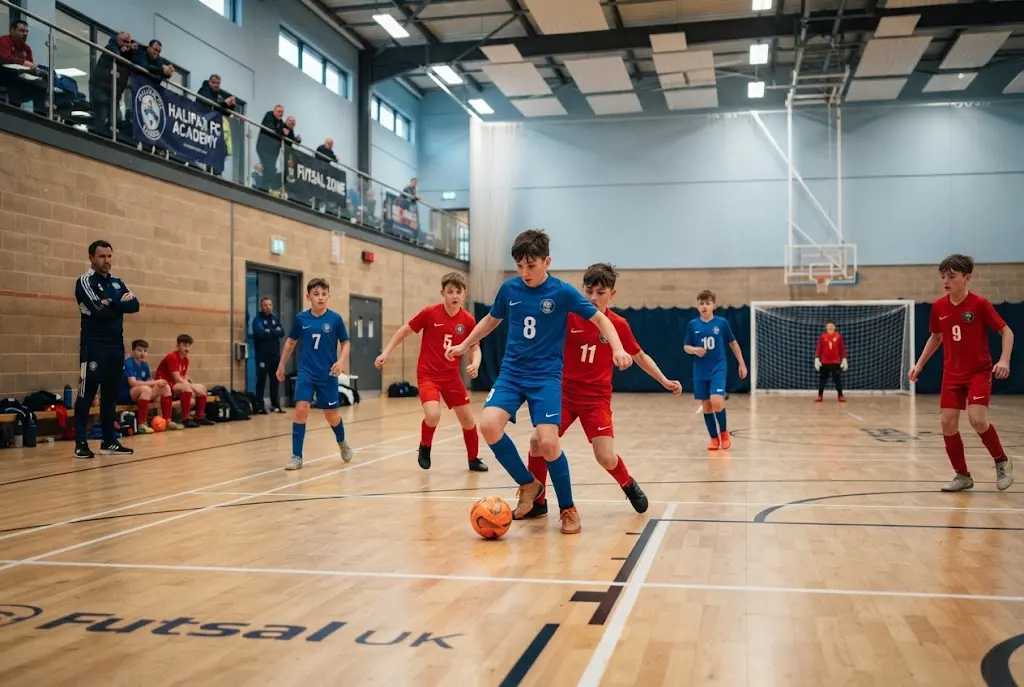
The format is played by two teams with five players on court, including the goalkeeper. With less space and fewer players than a traditional outdoor match, players are frequently involved in the game. This makes movement, communication and quick decision-making especially important.
What Is Futsal?
Futsal is a small-sided form of football traditionally played indoors on a hard court. The sport is recognised internationally and is governed globally by FIFA, with its Laws of the Game providing the framework for international futsal competitions.
The name is sometimes mistakenly written as futsbal in online searches. The standard spelling is futsal.
Unlike outdoor football, where matches can take place on large grass or artificial pitches, futsal uses a significantly smaller playing surface. The reduced space changes how players receive the ball, create passing angles and defend.
How Futsal Is Different From Outdoor Football
The most obvious difference is the size of the playing area. Futsal gives players less time and space, so technical mistakes can be punished quickly. A player receiving the ball needs to know what they are going to do before the ball arrives.
The number of players also changes the experience. With five players on each side, every player has an important role in attacking and defending. Players may need to move into space, support teammates and recover defensively within seconds.
The ball is another important difference. An official futsal ball is smaller than a standard football and has characteristics designed for the indoor game. Its construction and reduced bounce help players maintain control on the court.
Futsal Rules Young Players Should Know
The exact competition regulations can vary depending on the level and organiser, but official futsal has several characteristics that distinguish it from conventional football.
Five Players Per Team
Each team has five players on the court, including a goalkeeper. Substitutions can be made during a match according to the applicable competition rules, allowing the game to maintain its high tempo.
Kick-Ins Instead of Throw-Ins
When the ball goes out over the touchline, futsal uses a kick-in rather than the traditional throw-in used in outdoor football. This keeps the ball on the ground and encourages quick restarts.
Goalkeeper Involvement
The goalkeeper has an important role in futsal because the smaller court means that attacks can develop very quickly. Goalkeepers need to be comfortable distributing the ball and making decisions under pressure.
Accumulated Fouls
Futsal has specific rules concerning accumulated team fouls. Once a team reaches the relevant limit during a period, additional fouls can lead to a direct free-kick situation under the Laws of the Game. Competition rules should always be checked because local youth competitions can have modifications.
Why Futsal Can Help Young Footballers
One of the biggest benefits of futsal for developing players is the number of meaningful touches they can receive during a game. Because the court is small and players are constantly involved, there are frequent opportunities to control the ball, pass, turn and make decisions.
This can help young players become more comfortable when opponents are close. Instead of having several metres of space to control the ball, players often need to protect possession in confined areas.
Close Ball Control
Futsal encourages players to keep the ball close to their feet. Quick changes of direction and controlled touches can become important when space is limited.
Passing and Receiving
Short passing is central to the game. Players need to offer passing options, receive the ball correctly and move again to create another option for the teammate in possession.
Decision-Making
Players have less time to decide whether to pass, dribble, shoot or move into space. This constant decision-making can make training sessions highly engaging for young footballers.
Movement Without the Ball
Futsal also teaches an important lesson that applies to outdoor football: players cannot simply wait for the ball. Movement creates passing options and helps teams maintain possession.
Futsal for Football Academy Development
Futsal can complement a wider youth development programme because it exposes players to situations that demand technical precision. A young player may receive the ball while being closely marked and have only a moment to find a teammate.
These situations encourage players to scan their surroundings, understand where teammates are positioned and make decisions before receiving possession.
For academy and grassroots coaches, futsal can therefore be used as one part of a broader development programme rather than as a replacement for outdoor football. Outdoor football remains essential for learning the specific demands of larger pitches, while futsal offers a different technical environment.
Young players can also develop their understanding of the football rules while experiencing how different formats modify the game.
Futsal and Schools Football
Schools can also provide an effective environment for introducing young people to futsal. Indoor facilities allow football activities to continue when outdoor pitches are unavailable because of weather or pitch conditions.
School-based sessions can introduce children to passing, ball control, movement and teamwork in a format that keeps players involved. These experiences can then support participation in wider schools football programmes and grassroots football.
For players who enjoy the indoor format, local clubs and community organisations may provide additional opportunities to train or compete.
Is Futsal Good for Beginners?
Futsal can be challenging for beginners because the game moves quickly and there is often little time to react. However, that does not mean a new player needs advanced skills before trying it.
Good introductory sessions can break the game into simple activities before moving into small-sided matches. Beginners can first learn basic control, passing and movement, then gradually become more comfortable playing under pressure.
The key is finding a session appropriate for the player’s age and experience. Youth football providers should be able to explain the structure of their sessions and whether they are suitable for beginners.
Futsal Skills That Transfer to Outdoor Football
Many of the skills developed through futsal are relevant to outdoor football. Receiving the ball under pressure, passing accurately, creating space and making quick decisions are valuable regardless of the size of the pitch.
Futsal can particularly encourage players to become comfortable using different parts of their feet. The smaller environment rewards accurate control and efficient movement rather than relying entirely on speed.
The experience can also help players understand the importance of positioning. A player who learns to create a passing angle in a crowded court can carry that awareness into larger-sided football.
Futsal, Disability Football and Inclusive Participation
Football participation includes many different formats, and players can benefit from finding an environment suited to their individual needs and circumstances.
For young people interested in inclusive opportunities, disability football provides information about adapted and inclusive approaches to participation. The appropriate format will depend on the player, the local programme and the support available.
Futsal itself is not automatically suitable for every player, so coaches and families should consider facilities, accessibility and the structure of a particular session before participating.
How to Get Started With Futsal
If a young player wants to try futsal, start by looking for sessions offered by local football clubs, schools, community organisations and recognised football bodies. Ask about age groups, playing level, facilities and whether equipment is provided.
It is also worth finding out whether the session is recreational or competition-focused. Beginners may benefit from a development session where the emphasis is on learning and enjoying the game rather than winning matches.
Parents can also speak with coaches about how futsal fits into a child’s wider football development. A balanced programme can expose young players to different football environments without making one format the sole focus.
Futsal as Part of a Wider Football Journey
Young players do not need to choose one form of football permanently. Academy training, grassroots football, schools football and small-sided formats can all contribute different experiences.
Futsal provides a particularly useful environment for learning how to operate in tight spaces and make fast decisions. Those skills can complement outdoor football and help young players become more confident when they have possession.
As players progress, understanding different versions of the sport can also make them more adaptable. Whether they are learning the fundamentals through football rules, taking part in schools football or exploring other participation pathways such as walking football, each format offers a different way to remain connected with the game.
For young footballers, futsal is ultimately about more than playing indoors. Its fast pace, limited space and constant involvement can create valuable opportunities to practise technical skills, awareness, teamwork and decision-making in a demanding but enjoyable environment.