Every young player has asked the same question at some point: where exactly am I supposed to stand, and what am I meant to do when I get there? This guide to football positions explained in plain language walks through every role on the pitch, from the goalkeeper guarding the net to the striker leading the line. Whether you are joining your first team, moving up an age group or simply trying to understand the game you watch every weekend, knowing what each position involves makes everything else — tactics, training and teamwork — much easier to follow. If you are still learning the basics of the sport itself, our guide to the 17 laws of football is the perfect place to start before coming back to positions.
Why Every Position Matters
A football team is built like a chain. Each of the eleven players has a starting area of the pitch and a set of jobs that connect with the roles around them. When one link in the chain switches off, the whole side feels it: a full-back caught out of position leaves the centre-back exposed, and a midfielder who does not track back leaves the defence outnumbered. That is why coaches spend so much time on shape and positioning during training, and why young players who understand several positions — not just their own — tend to develop faster. Versatility is highly valued at every level of the game, and the academy pathway rewards players who can adapt. You can read more about how structured development works in our guide to the football academy system.
Positions are traditionally described using shirt numbers, a habit that dates back to the early days of numbered jerseys. The goalkeeper wears number 1, defenders tend to take 2 to 5, midfielders 6, 7, 8 and 11, and forwards 9 and 10. Modern squads no longer follow this strictly, but commentators and coaches still talk about “a number six” or “a number ten” as shorthand for a type of player, so it is worth knowing what those labels mean as you read through the roles below.
Football Positions Explained: The Defensive Roles
The goalkeeper is the only player allowed to handle the ball, and only inside their own penalty area. The modern keeper does far more than stop shots: they organise the defence at set pieces, command their box at crosses and start attacks with accurate distribution, often playing almost as an extra defender when the team has possession. Good positioning and calm decision-making matter just as much as spectacular saves.
In front of the goalkeeper, centre-backs form the heart of the defence. Their main jobs are to win headers, block shots, mark opposing strikers and clear danger, although many are now expected to pass the ball out from the back as well. Either side of them, full-backs defend the wide areas and support attacks down the flanks. In attacking teams, full-backs who push high up the pitch are often called wing-backs, a role that demands huge stamina because the player must cover the entire side of the pitch almost single-handedly.
Midfield Roles: The Engine Room
Midfield is where matches are usually won and lost, and it contains the widest variety of roles. The defensive midfielder — the number six — sits in front of the defence, breaking up opposition attacks, winning the ball back and keeping possession moving with simple, reliable passing. Just ahead, central midfielders link defence and attack, covering large distances and contributing at both ends of the pitch; players in this all-action role are often described as box-to-box midfielders.
The attacking midfielder, traditionally the number ten, plays between the opposition’s midfield and defence, looking for pockets of space to receive the ball and create chances for others. Out wide, wingers and wide midfielders stretch the pitch, take on full-backs and deliver crosses or cut inside to shoot. Because midfielders touch the ball more than anyone else, this is where coaching focuses heavily on first touch, awareness and passing technique — all skills covered in our guide to football coaching for young players.
Attacking Roles: Wingers, Playmakers and Strikers
The striker or centre-forward, the number nine, is the team’s main goal threat. Strikers come in different styles: some are powerful target players who hold the ball up and bring teammates into play, others are quick forwards who run in behind defences, and some play as a “false nine”, dropping deep into midfield to drag defenders out of position and create space for others. Whatever the style, a striker is judged on movement and finishing above everything else.
Supporting forwards include second strikers and inside forwards, who start from slightly deeper or wider positions and join attacks late, making them harder to mark. In youth football these attacking roles rotate a lot, which is healthy: playing across the front line teaches young forwards how each position feels, and that understanding shows later when they settle into one role. It is also exactly what talent spotters look for — our guide to football scouting explains how young players get noticed by clubs.
How Formations Change the Jobs
A formation is simply a map of where positions sit. In a 4-4-2, four defenders and four midfielders support two strikers, giving the team a solid, balanced shape that young players find easy to understand. A 4-3-3 uses three central midfielders and three forwards, which suits teams that want to press high and keep the ball. A 3-5-2 removes the full-backs and relies on wing-backs instead, packing the centre of midfield with five players. The important thing for beginners is that the numbers describe starting positions, not fixed spots: in a real match, players move constantly, swap places and cover for each other, which is why understanding the responsibilities of each role matters more than standing in a rigid line.
How Young Players Find Their Best Position
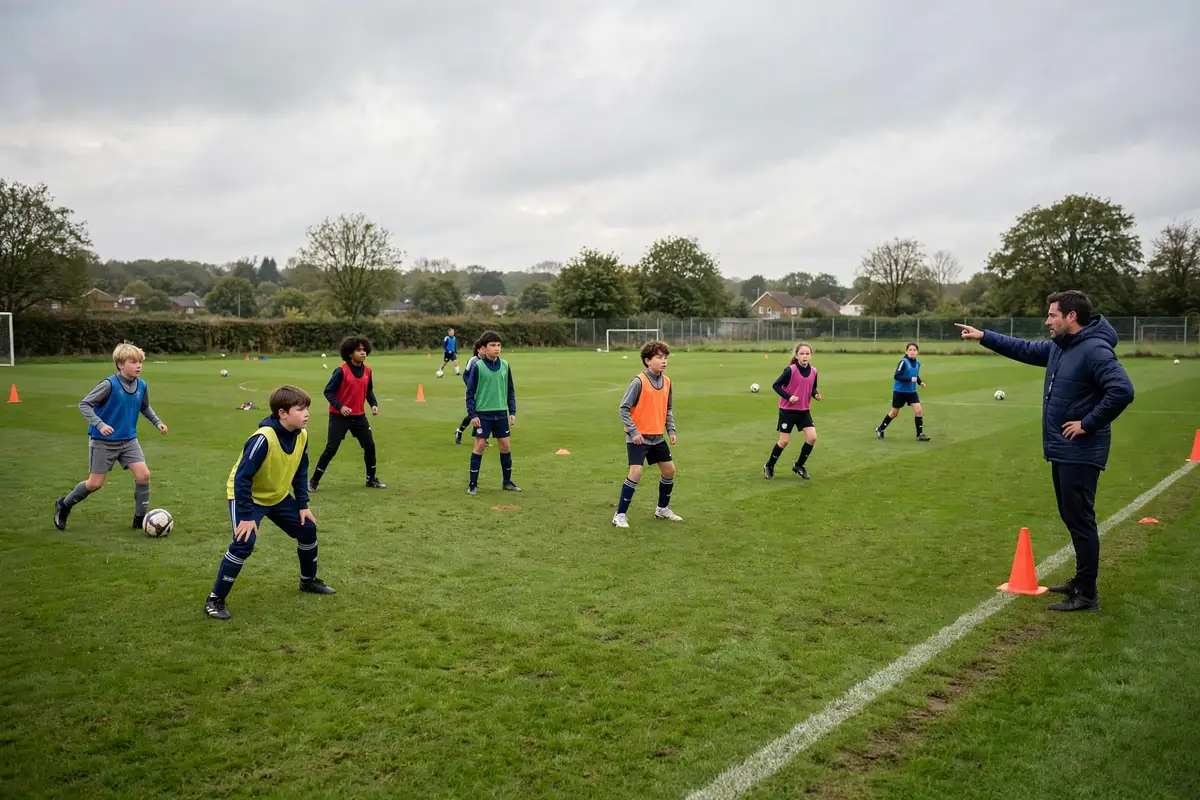
Very few players stay in the first position they ever try. Coaches usually rotate youngsters through several roles so they learn the whole game, and a child’s best position often becomes clear only as their speed, strength and confidence develop. A small, quick player might start on the wing and end up at full-back; a tall youngster placed at centre-back for their height might turn out to be a natural striker. Parents and players should not worry about being “moved” — it is a normal and valuable part of learning, especially in the early years covered by our guide to football for kids.
The honest answer is that the best position is the one where a player helps the team most and enjoys the game. Keep an open mind, watch how senior players in your position move and communicate, and practise the basic skills that every role shares: passing, receiving the ball under control, and scanning the pitch before the ball arrives. For a broader look at how the pathway works across Scotland, see our guide to youth football in Scotland. Master the role you are given today, stay curious about all the others, and your understanding of the game will grow every single week.