
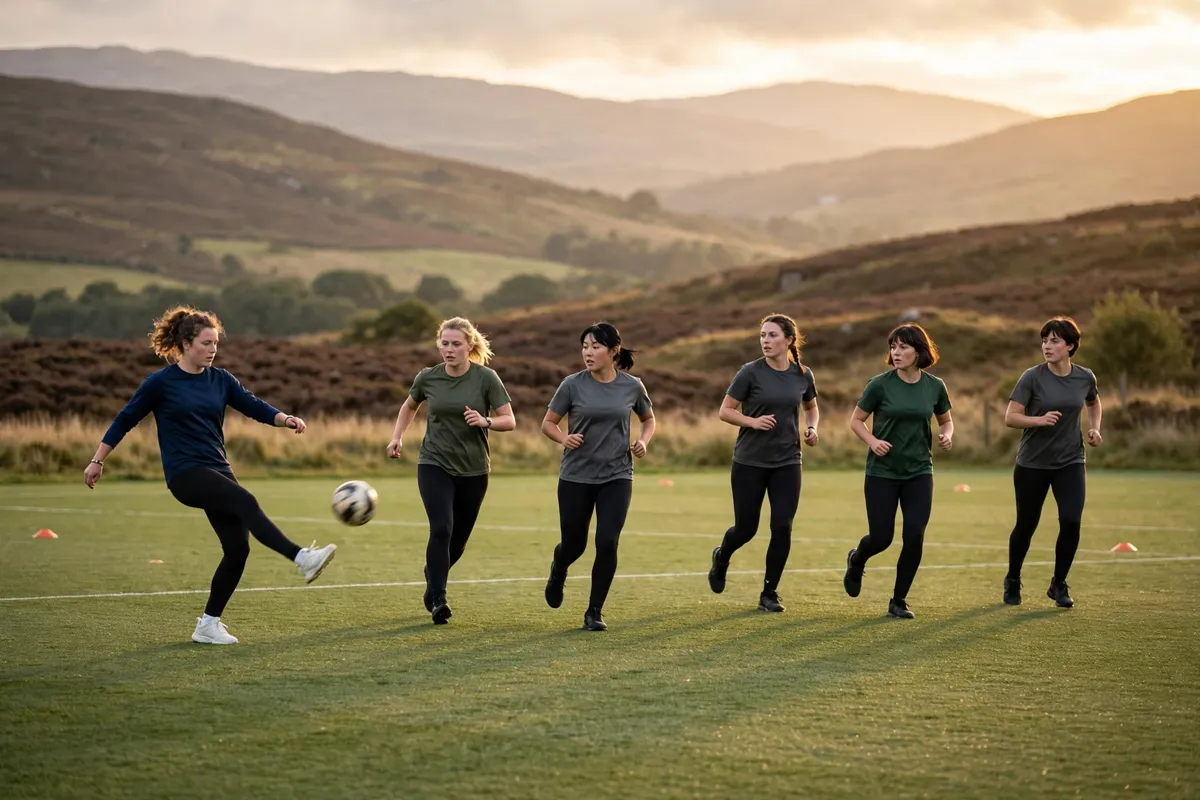
More women and girls across Scotland are pulling on boots for the first time every season, and if you are thinking about joining them, the good news is that there has never been an easier time to start playing womens football. You do not need experience, a trial or expensive kit. What you need is a team at the right level, a first session that feels welcoming, and a realistic idea of what the early weeks look like. This guide walks through each step, from finding a club to your first match.
Start With the Right Level, Not the Highest One
The most common beginner mistake is aiming straight for a competitive league side and feeling out of place. Scottish women’s football has a pyramid, from recreational and development football up through the regional leagues to the national SWPL, and the lower rungs exist precisely for new and returning players. Recreational sessions, sometimes run as turn-up-and-play football, let you build fitness and basic skills without league pressure. Development teams sit one step up, with regular training and friendlies. Start where the pace lets you touch the ball often: confidence grows far faster in games where you are involved.
If you are returning after years away from the game, the same advice applies. Your reading of the game will come back quickly; your touch and fitness take a few weeks, and a development environment gives you that time without judgement.
How to Find a Team Near You
Most clubs advertise open sessions at the start of the season and again in January, and many run rolling recruitment for their women’s and girls’ sections. The practical steps that work:
- Search for local clubs with a women’s section and check their social channels, where open training sessions are usually announced first.
- Ask at your local sports centre or school: community coaches know which teams are actively recruiting beginners.
- Go and watch a session before committing. The atmosphere matters more than the facilities; a good beginner environment has coaches who explain drills and players who encourage.
Our general guide to finding the right football club near you covers the questions to ask any club, and our overview of grassroots football in Scotland explains how the community game is structured. For younger players, our guide to girls football and finding the right team walks parents and players through age groups and first steps.
What You Actually Need to Begin
Beginners often overbuy. For your first month you need boots suited to the surface you will train on (most community football in Scotland is on 3G artificial pitches, where moulded or astroturf boots work best), shin pads, and comfortable training clothes. Clubs provide match kit once you register. Goalkeepers aside, nobody needs specialist equipment to start. If money is tight, say so: many clubs keep spare boots for new players and keep registration costs as low as they can, because growing the squad matters more to them than the fee.
What Training Looks Like for New Players
A typical beginner-friendly session mixes a warm-up, simple technical drills (passing, first touch, turning), small-sided games and a cool-down. Small-sided games are the heart of it: in a five-a-side you will touch the ball far more than in a full match, which is exactly what a new player needs. Expect your first touch to feel rushed for a few weeks. That is normal, and it improves quickly with repetition. Fitness builds the same way; football fitness is mostly short bursts, and regular training raises it faster than solo running for most people.
Parents bringing younger players along can find the wider picture in our guide to football for kids and youth player development, including how coaches group players by age and stage.
Understanding Pathways Without the Pressure
Scotland has a defined player pathway, from fun-focused children’s football through youth age groups into the senior women’s game, and talented players can progress through regional and national development programmes. For most beginners, though, the pathway matters only as reassurance: there is a level for you now, and a next level if you want it later. Play for enjoyment first. The players who stay in the game longest, at every standard, are the ones who liked their Tuesdays and Thursdays, not just their Saturdays.
If you also want to follow the elite game as you learn, our beginner’s guide to following the women’s game explains the leagues, competitions and storylines to watch, and watching good players in your position is one of the fastest ways to improve your own understanding.
Your First Match: What to Expect
First matches are chaotic for everyone, whatever their age. You will be caught out of position, misjudge a bounce and play a pass to nobody, and so will everyone else who ever started. Coaches at grassroots level expect it and plan for it. Listen for simple instructions, keep asking for the ball, and remember that effort and positioning cover most beginner mistakes. Afterwards, note one thing you did well and one thing to practise; that habit, repeated over a season, is what turns a beginner into a player.
The Bottom Line
To start playing womens football in Scotland, you need a welcoming club, the right level, basic kit and a few patient weeks. Everything else, the touch, the fitness, the understanding, is built by playing. Find a session this week, go along once, and judge the game by how that first hour feels. For most people who try it, that is all it takes to be hooked.